All that remains | That which is left behind
2019; intermedia; dimensions variable
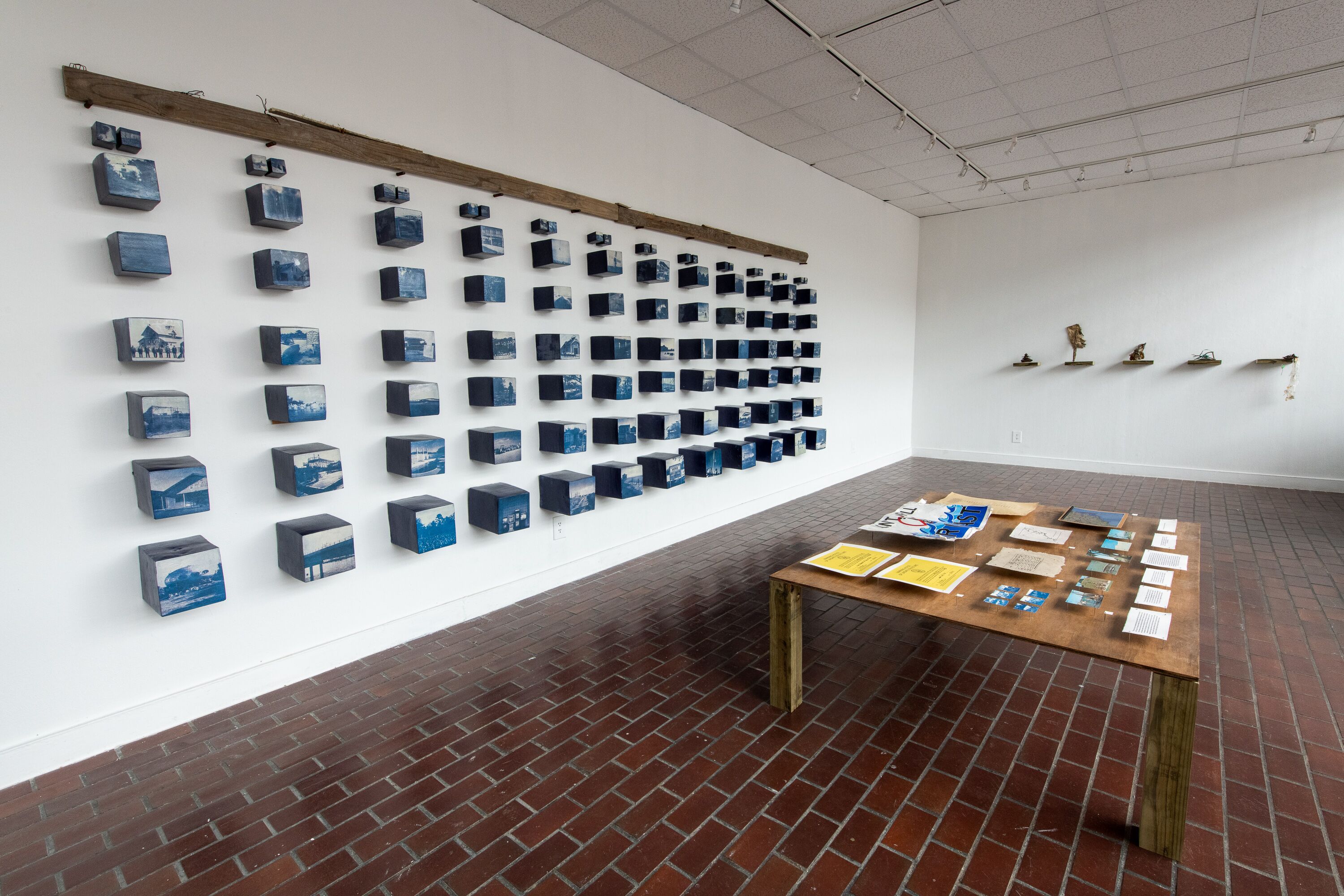
This installation concentrates on visual quantification of sea level rise projections for the North Carolina coast line by mid-century. Employing hybrid strategies of data visualization inclusive of photography, found object art, and printmaking, I created ceramic boxes depicting contemporary and historic imagery of 23 North Carolina coastal counties that have been and continue to be impacted by sea level rise. The dimensions of these boxes correspond to the ranges of sea level rise that are predicted under best-case and worst-case emissions scenarios for 2045. Boxes are mounted on the wall to a height of 6.6 feet, the highest projection for global sea level rise by 2100.
All that remains | That which is left behind was exhibited in the John & June Alcott Gallery in Hanes Art Center in April 2019, with support from The Sarah Steel Danhoff Undergraduate Research Award and the Incubator Awards: Research Grant for Creative Artists.
meredith emery
1 / 15
2 / 15
All that remains | That which is left behind
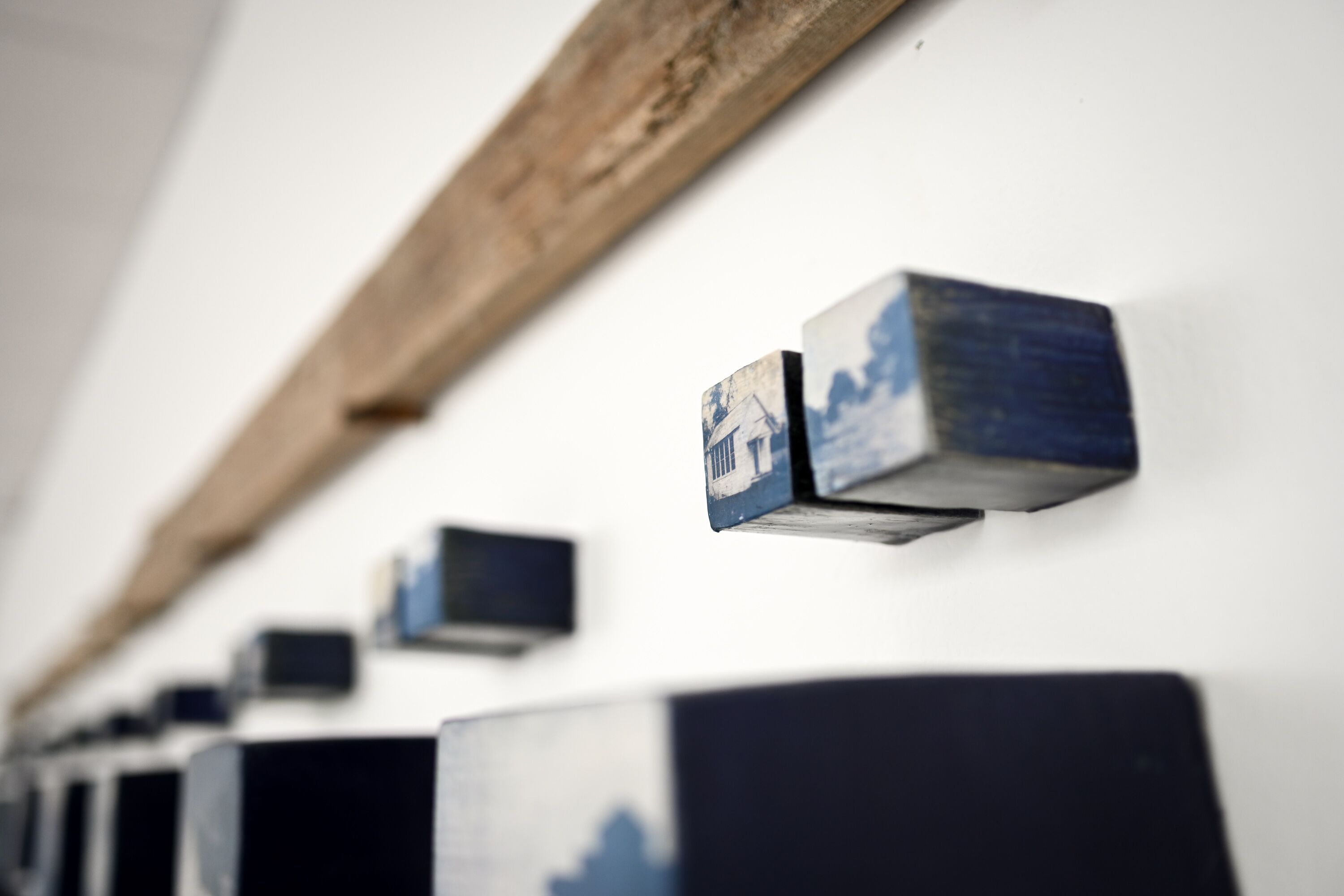
2019; glazed stoneware, decals, wood; dimensions variable
Installation detail featuring decals applied to stoneware. The images on the surface of each box are a combination of postcard imagery from coastal North Carolina counties and contemporary photographs that I took along the Outer Banks. All postcard imagery was sourced from the Louis Round Special Collections at Wilson Library on the UNC-CH campus.
2019; glazed stoneware, decals, wood; dimensions variable
Installation detail featuring decals applied to stoneware. The images on the surface of each box are a combination of postcard imagery from coastal North Carolina counties and contemporary photographs that I took along the Outer Banks. All postcard imagery was sourced from the Louis Round Special Collections at Wilson Library on the UNC-CH campus.
3 / 15

All that remains | That which is left behind
2019; severe weather lumber, found objects; dimensions variable
Installation detail of found object assemblage. I collected these items during a field research trip along the Outer Banks. Objects include various beach and roadway debris.
2019; severe weather lumber, found objects; dimensions variable
Installation detail of found object assemblage. I collected these items during a field research trip along the Outer Banks. Objects include various beach and roadway debris.
4 / 15
All that remains | That which is left behind
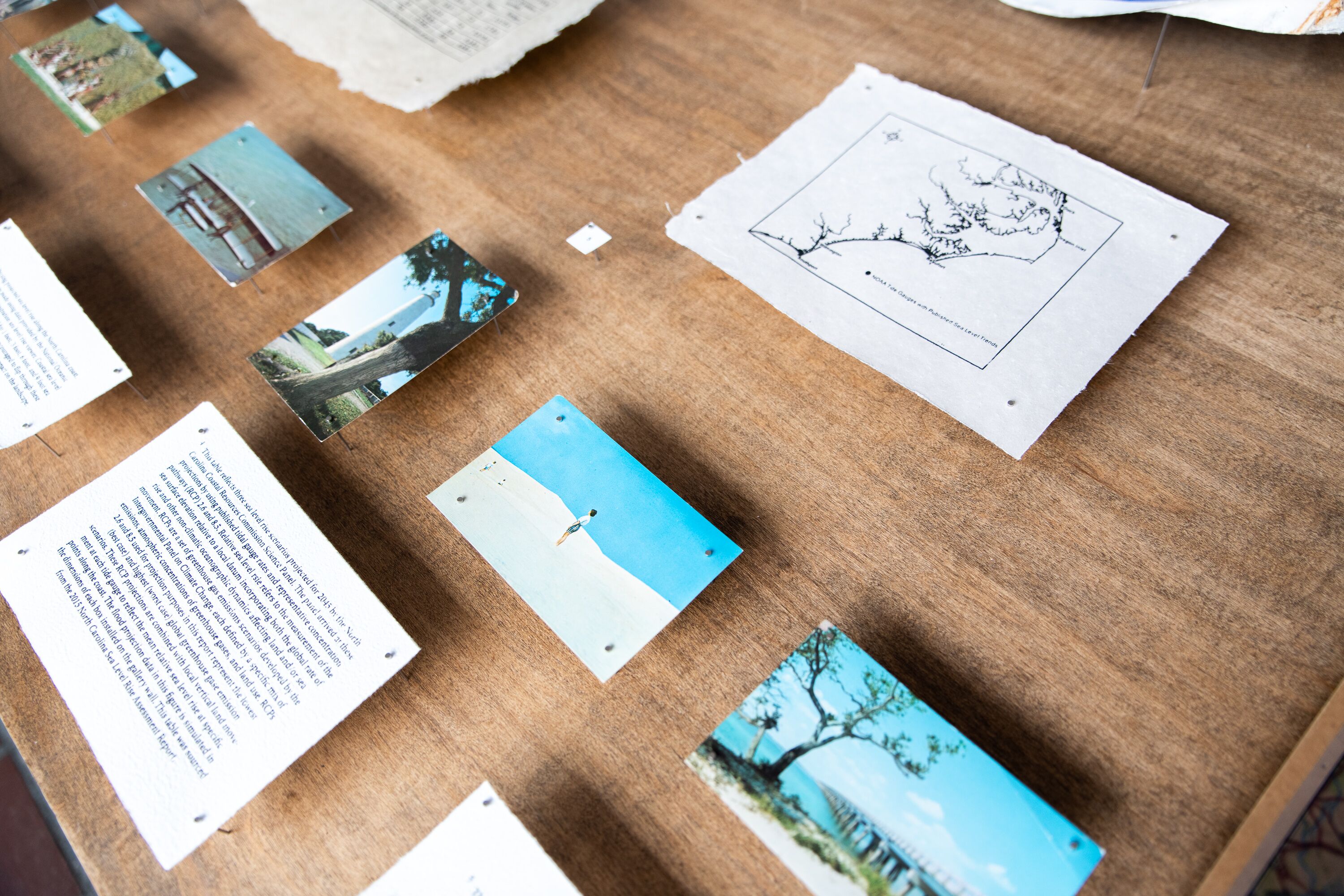
2019; handmade paper, ink, postcards, wood; dimensions variable
Detail of the research table central to the installation. This table served as a reference point for contextualizing the adjacent objects throughout the exhibition. Items included a list of the counties featured in the exhibit, a series of ArcGIS maps visualizing decadal sea level rise in North Carolina, cyanotypes, found postcards, and appropriated/revised warning signage.
2019; handmade paper, ink, postcards, wood; dimensions variable
Detail of the research table central to the installation. This table served as a reference point for contextualizing the adjacent objects throughout the exhibition. Items included a list of the counties featured in the exhibit, a series of ArcGIS maps visualizing decadal sea level rise in North Carolina, cyanotypes, found postcards, and appropriated/revised warning signage.
5 / 15

Chapel Hill Stream Project
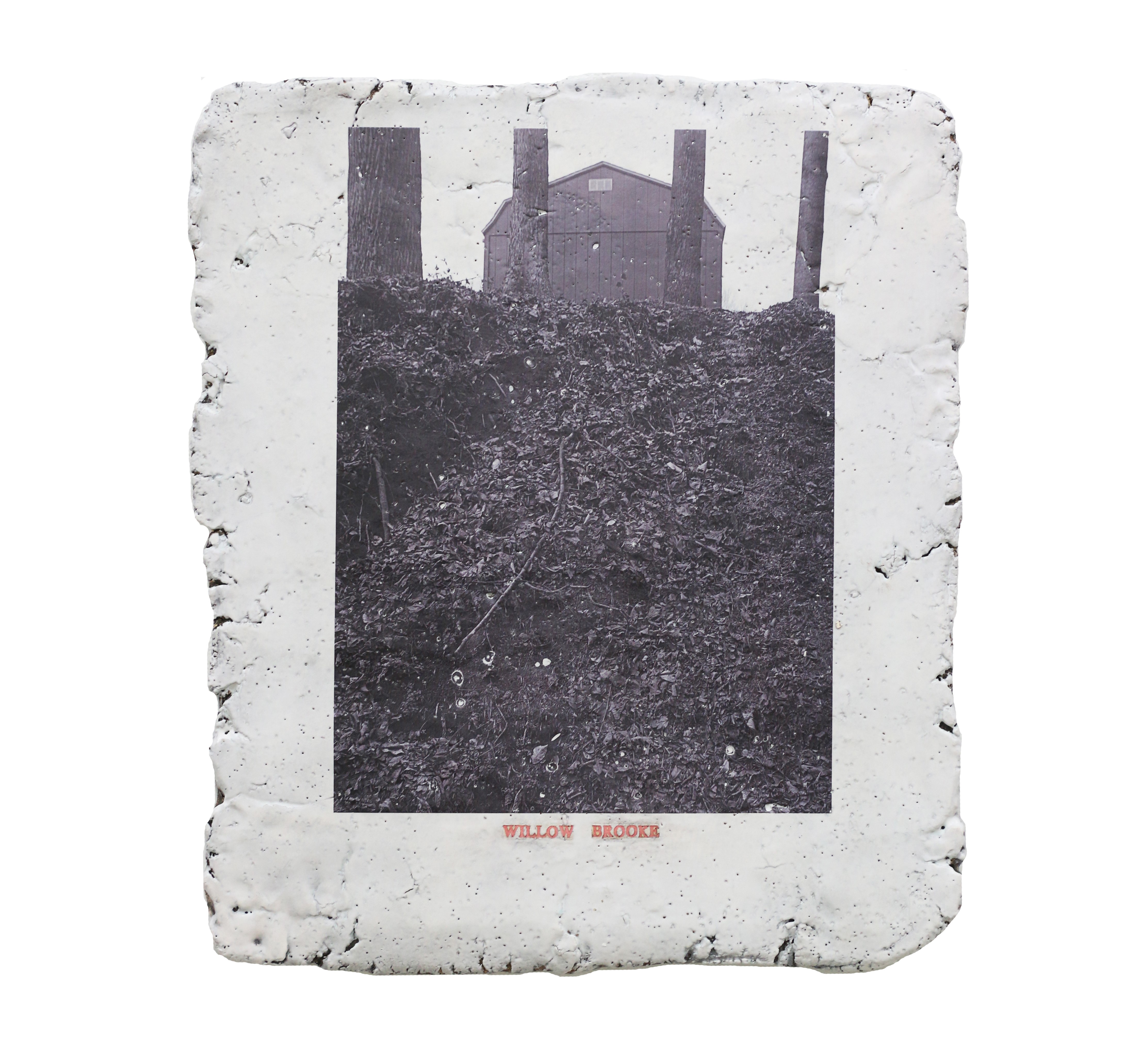
2018; glazed stoneware, decals; 16" x 18", edition of 15
This research project investigates the effects of human activities on local Chapel Hill, North Carolina stream spaces. Through ceramics and photography, I documented erosion and channel incision in streams from urban runoff.
Culminating in fifteen ceramic wall tiles, I combined North Carolina clay with sediments from each stream site and then decal-fired a photograph from a local stream on the surface. The compositions of each image interact with one another from left to right, emphasizing the connectivity of both stream networks and stream degradation.
This work was executed in partnership with the Carbonshed Lab at UNC-CH, a research team investigating the cycling of nutrients in local Chapel Hill watersheds, with support of the James B. Gadson Fund for Summer Undergraduate Research Fellowships. This series is now exhibiting at the UNC-CH Institute for the Environment.
2018; glazed stoneware, decals; 16" x 18", edition of 15
This research project investigates the effects of human activities on local Chapel Hill, North Carolina stream spaces. Through ceramics and photography, I documented erosion and channel incision in streams from urban runoff.
Culminating in fifteen ceramic wall tiles, I combined North Carolina clay with sediments from each stream site and then decal-fired a photograph from a local stream on the surface. The compositions of each image interact with one another from left to right, emphasizing the connectivity of both stream networks and stream degradation.
This work was executed in partnership with the Carbonshed Lab at UNC-CH, a research team investigating the cycling of nutrients in local Chapel Hill watersheds, with support of the James B. Gadson Fund for Summer Undergraduate Research Fellowships. This series is now exhibiting at the UNC-CH Institute for the Environment.
6 / 15
Willow Brooke
2018; glazed stoneware, decal; 16" x 18"
Tile detail.
2018; glazed stoneware, decal; 16" x 18"
Tile detail.
7 / 15
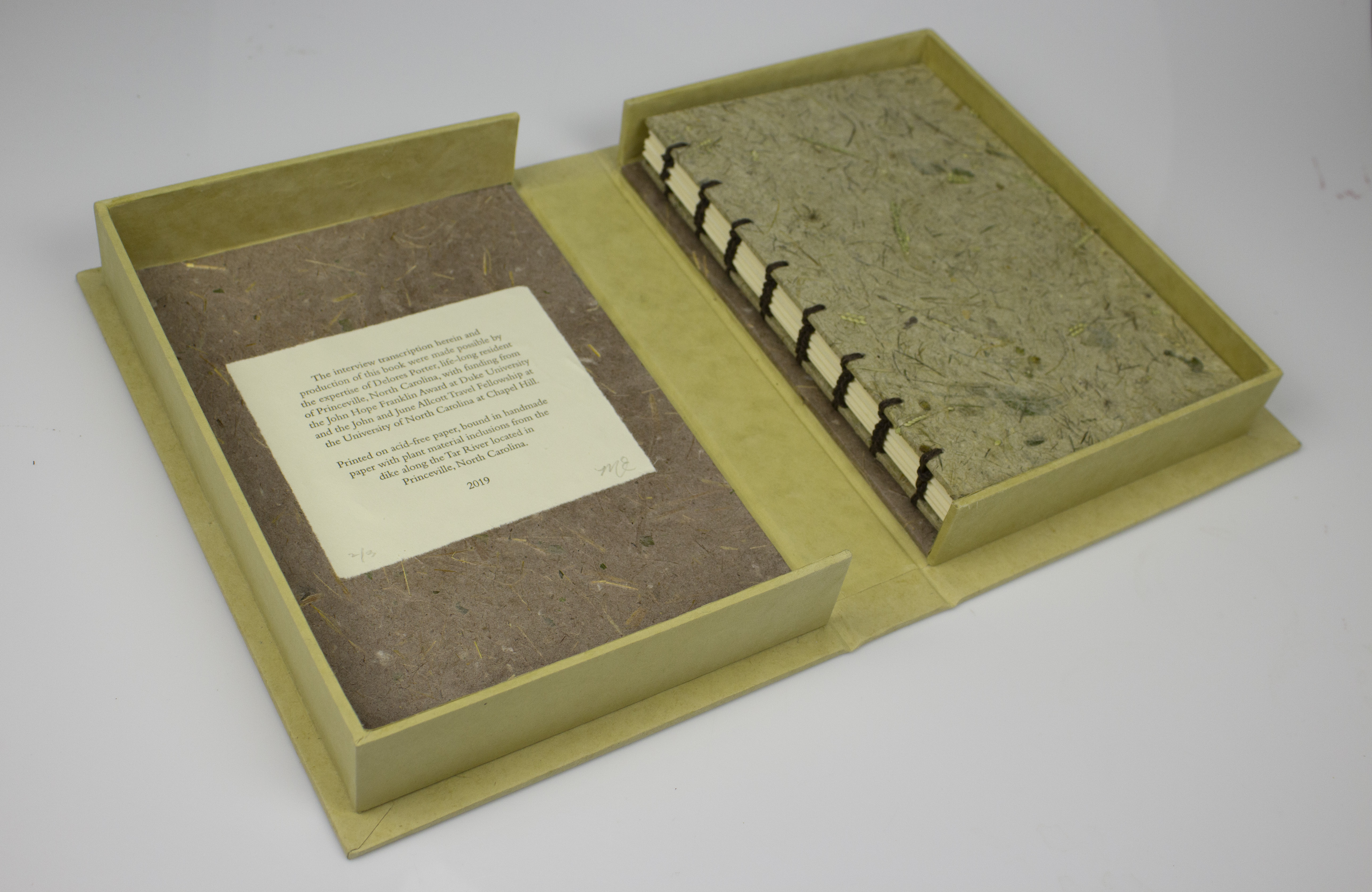
Between: An Interview from Princeville, North Carolina
2019;handmade paper, ink, binder’s board; 6" x 9", edition of 3
This documentary project was made in collaboration with residents of Princeville, North Carolina. Located in the eastern part of the state, Princeville is believed to be the oldest town incorporated by freed slaves in the United States. Flanking the Tar River, Princeville is also located in a 100-year floodplain that has suffered critical impacts from the effects of hurricane flooding since its establishment over 150 years ago. In 2016, the town was devastated by Hurricane Matthew, which continues to displace many of the town's residents from their homes.
I created a handmade book containing the transcription of an interview conducted with a Princeville resident. Together, we investigate how issues of environmental racism and the local impacts of climate change influence the discrete ways in which people make meaning and develop identity. The book was bound in paper made from and dyed with plant fibers collected along the Princeville dike.
2019;handmade paper, ink, binder’s board; 6" x 9", edition of 3
This documentary project was made in collaboration with residents of Princeville, North Carolina. Located in the eastern part of the state, Princeville is believed to be the oldest town incorporated by freed slaves in the United States. Flanking the Tar River, Princeville is also located in a 100-year floodplain that has suffered critical impacts from the effects of hurricane flooding since its establishment over 150 years ago. In 2016, the town was devastated by Hurricane Matthew, which continues to displace many of the town's residents from their homes.
I created a handmade book containing the transcription of an interview conducted with a Princeville resident. Together, we investigate how issues of environmental racism and the local impacts of climate change influence the discrete ways in which people make meaning and develop identity. The book was bound in paper made from and dyed with plant fibers collected along the Princeville dike.
8 / 15
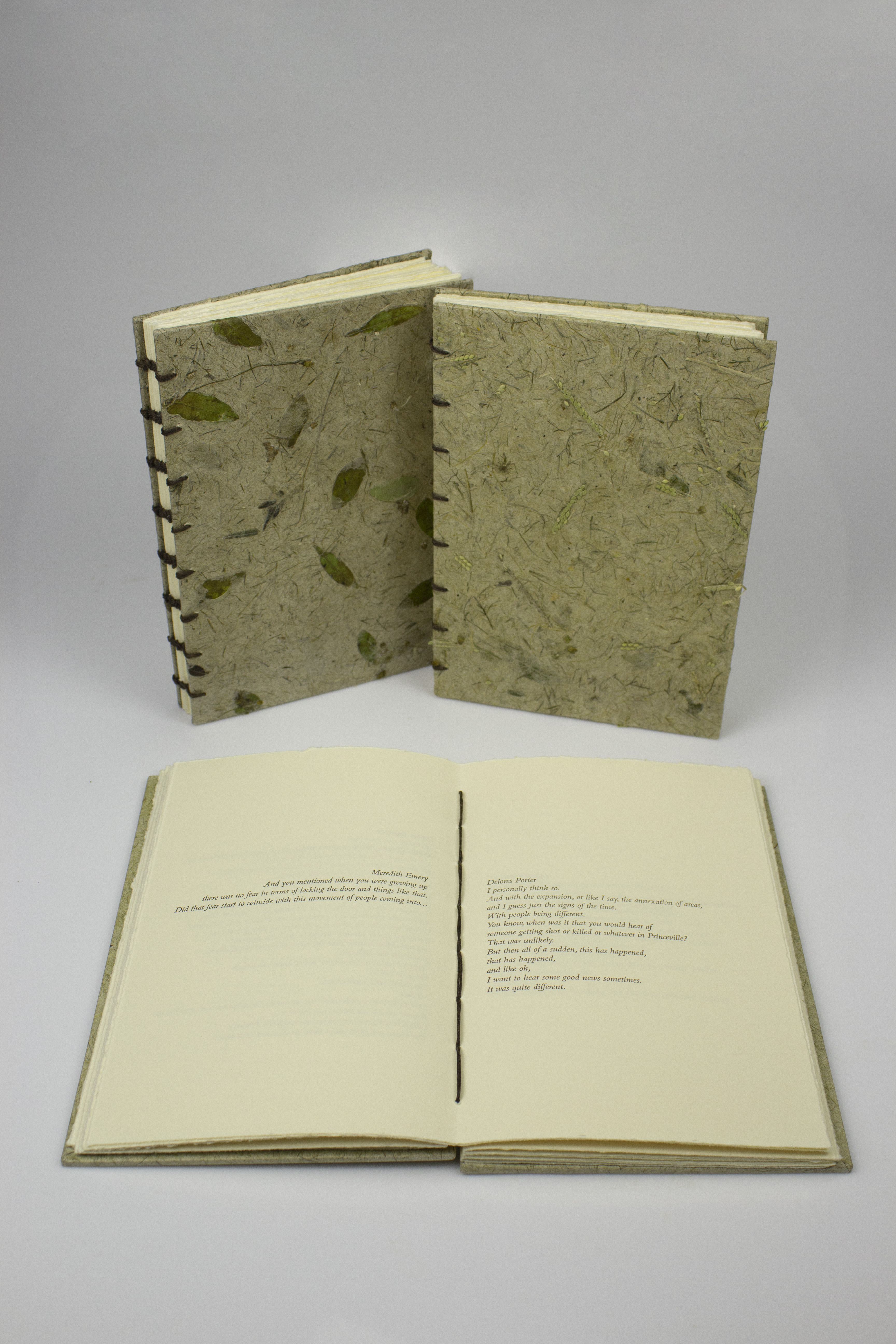
Between: An Interview from Princeville, North Carolina
2019; handmade paper, ink, binder’s board; 6" x 9", edition of 3
Edition detail.
9 / 15
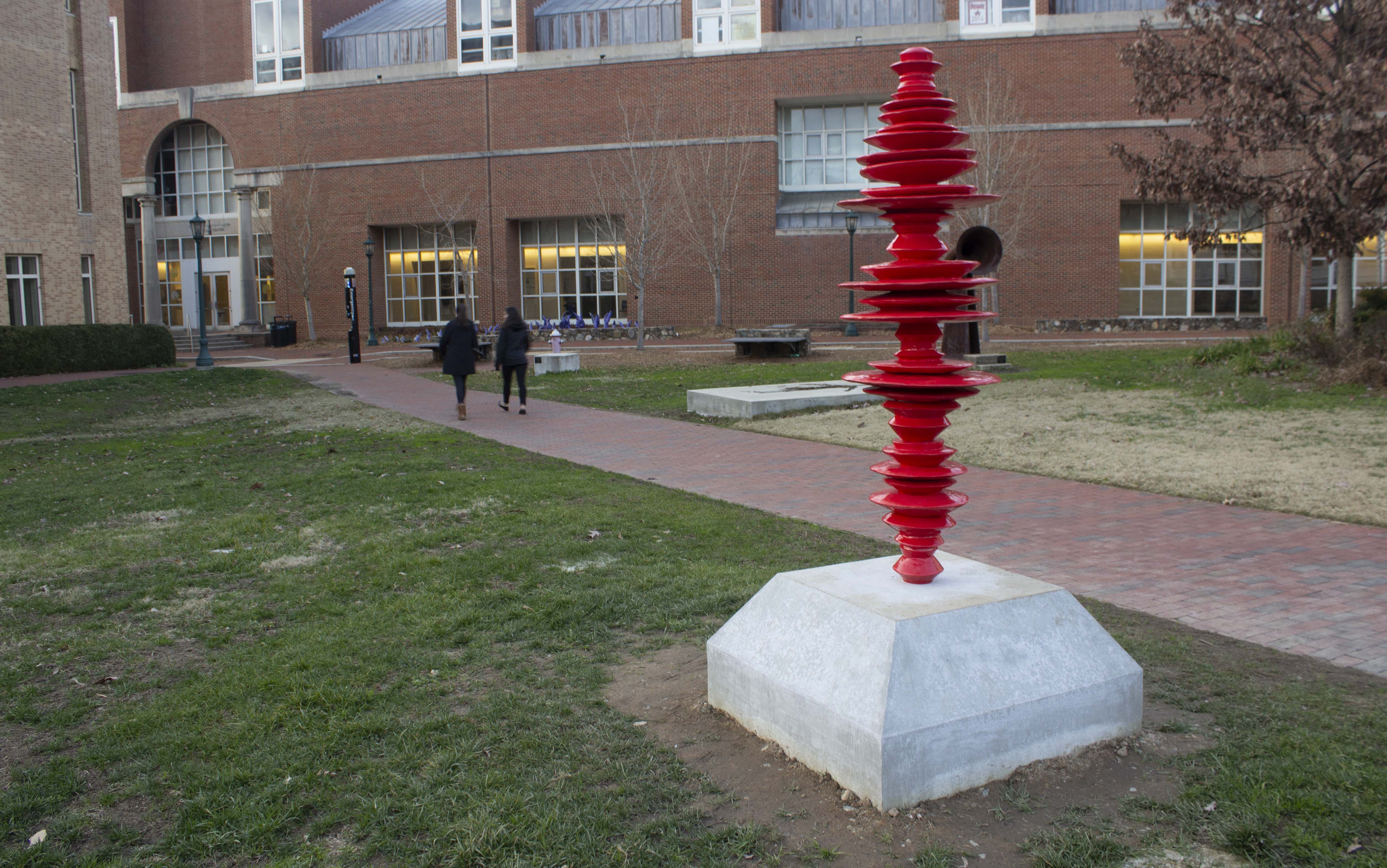
Forward together, not one step back
2019, glazed stoneware, concrete, aluminum plaque; 20" x 20" x 84"
This site-specific sculpture visualizes the vertical translation of a soundwave captured at a 2017 protest of Silent Sam in which activists chant the phrase in the work’s title while marching toward the former Confederate monument on campus. Located at a point of high foot traffic on university grounds, this piece provides a venue for discussion on the legacy of racism and slavery on UNC-CH campus. Forward Together, Not One Step Back was created with support from the Hanes Art Center Alumni Sculpture Garden Honorarium and is on display in the UNC-CH Alumni Sculpture Garden.
2019, glazed stoneware, concrete, aluminum plaque; 20" x 20" x 84"
This site-specific sculpture visualizes the vertical translation of a soundwave captured at a 2017 protest of Silent Sam in which activists chant the phrase in the work’s title while marching toward the former Confederate monument on campus. Located at a point of high foot traffic on university grounds, this piece provides a venue for discussion on the legacy of racism and slavery on UNC-CH campus. Forward Together, Not One Step Back was created with support from the Hanes Art Center Alumni Sculpture Garden Honorarium and is on display in the UNC-CH Alumni Sculpture Garden.
10 / 15
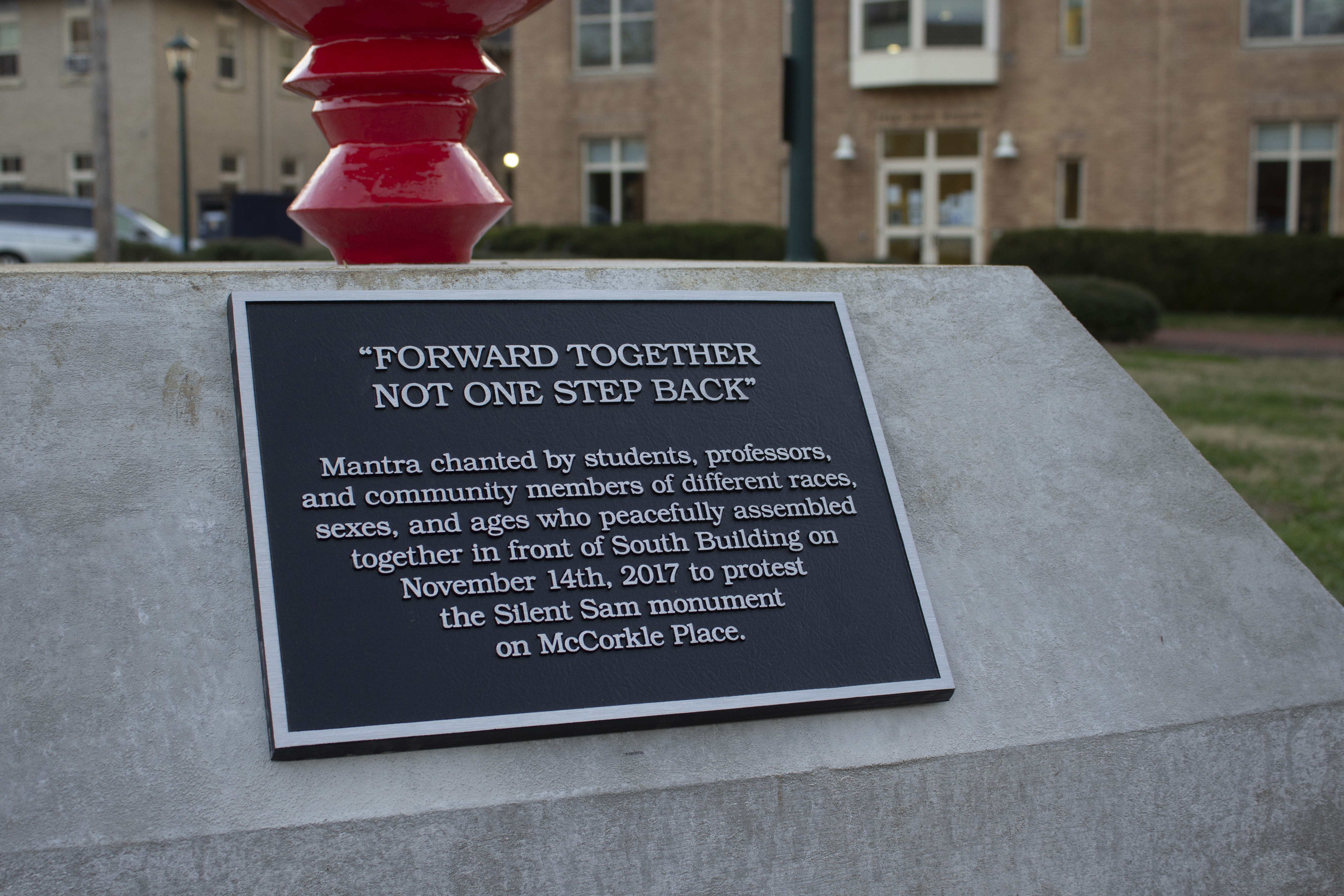
Forward together, not one step back
2019, glazed stoneware, concrete, aluminum plaque; 20" x 20" x 84"
Plaque detail.
2019, glazed stoneware, concrete, aluminum plaque; 20" x 20" x 84"
Plaque detail.
11 / 15
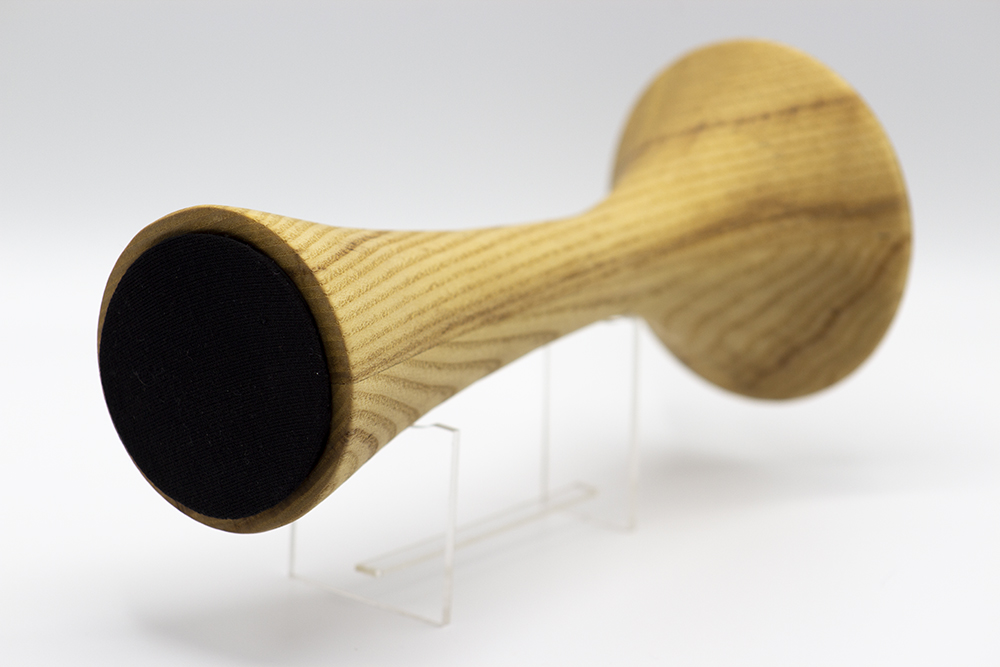
Silence Archive
2020; wood, fabric, plexiglass, sound; 10" x 3" x 3"
The Silence Archive examines the function of silence observed within the self as well as between individuals.
What are the dimensions of presence in conversation with others? How can people share with one another in the absence of verbal language? Under what social and environmental parameters does silence become political, healing, trusting, and/or confrontational between parties? This listening device plays ten to fifteen minute sessions of recorded silence between me and individuals in my community. Each session of shared silence is structured with a recording followed by a debrief on the reflections we each made in our time without words.
By asking others to listen to shared silence, listeners must attune to the sound of bodies and imagine the dimensions of the shared space in which the recording was made, all the while reflexively observing themselves in silence.
2020; wood, fabric, plexiglass, sound; 10" x 3" x 3"
The Silence Archive examines the function of silence observed within the self as well as between individuals.
What are the dimensions of presence in conversation with others? How can people share with one another in the absence of verbal language? Under what social and environmental parameters does silence become political, healing, trusting, and/or confrontational between parties? This listening device plays ten to fifteen minute sessions of recorded silence between me and individuals in my community. Each session of shared silence is structured with a recording followed by a debrief on the reflections we each made in our time without words.
By asking others to listen to shared silence, listeners must attune to the sound of bodies and imagine the dimensions of the shared space in which the recording was made, all the while reflexively observing themselves in silence.
12 / 15

Albedo Hats
2020, Emergency blankets, found umbrella frame, flashing; 40" x 40" x 12"
Albedo Hats are reflective apparatuses made from found objects that function as climate change adaptation garments. The albedo effect refers to the positive feedback loop in which snow and ice reflect the sun’s energy, cooling the atmosphere and preserving sea ice, glaciers, and snow packs. Under ordinary conditions this process regulates the earth’s temperature. However, anthropogenic climate change has trapped heat from greenhouse gases causing ice and snow packs that have been deflecting solar rays for millions of years to melt and give way to more heat absorption.
These hats were made collaboratively with Ayla Gizlice as part of an ongoing performance. Our collaborative action is a playful, surreal entry into serious conversation about coping with climate anxieties.
13 / 15
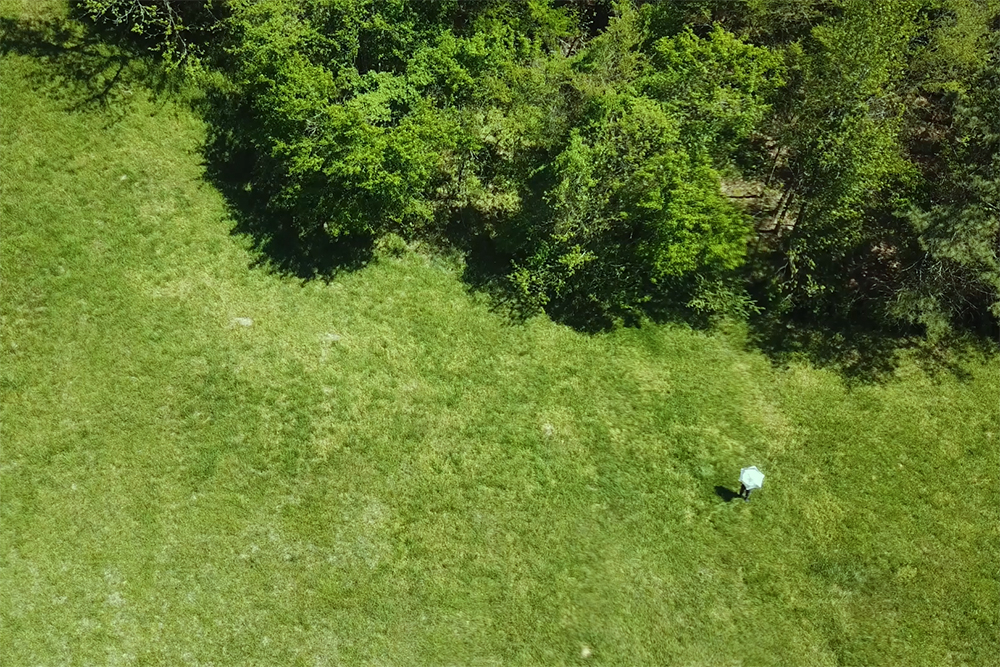
Albedo Hats
2020; emergency blankets, found umbrella frame, flashing; 40" x 40" x 12"
Aerial view of albedo hat.
While wearing our hats, Ayla and I participate in a writing practice within personally crafted reflective journals. Journal contents are unrestricted, responding to immediate thoughts and feelings during reflective sessions.
2020; emergency blankets, found umbrella frame, flashing; 40" x 40" x 12"
Aerial view of albedo hat.
While wearing our hats, Ayla and I participate in a writing practice within personally crafted reflective journals. Journal contents are unrestricted, responding to immediate thoughts and feelings during reflective sessions.
14 / 15
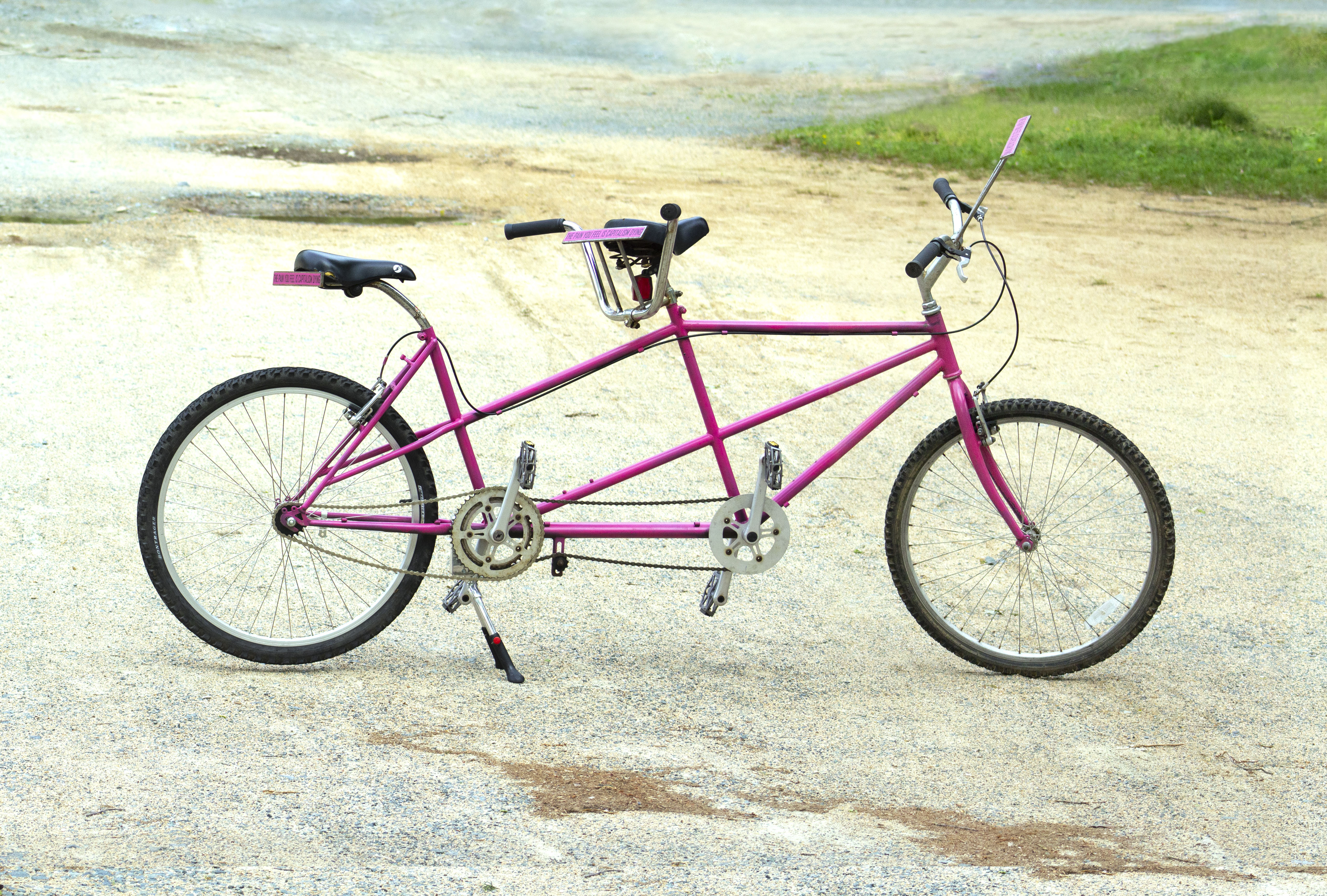
The Pain You Feel is Capitalism Dying
2020; tandem bike, steel, vinyl, spray paint; 7' bike
This anti-capitalist vehicle is a modified tandem bike that promotes systems of non-fossil fuel reliant transportation. This bike modification references the anti-imperialist, anti-capitalist protest bike project known as the Bike Bloc, an activist work in which discarded bikes were welded into machines of creative resistance. The Bike Bloc was used to help protesters infiltrate the 2009 COP15 Climate Summit by providing a blockade that supported activists on foot.
The tandem bike is second hand, and was repaired to a rideable state with the help of a local bike cooperative. Steel plates with vinyl stickers reading “THE PAIN YOU FEEL IS CAPITALISM DYING” are welded onto three parts of the bike, implicating the bikers, viewers, and the economic system within which we function as complicit in the climate emergency. Simultaneously, the bike embodies a collaborative opportunity to organize against fossil fuel reliant transportation.
15 / 15

The Pain You Feel is Capitalism Dying
2020; tandem bike, steel, vinyl, spray paint; 7' bike
Handlebar detail.